


Pet urine smell on artificial turf can turn your beautiful outdoor space into an unpleasant area you want to avoid. The synthetic fibers and backing materials trap urine compounds deep within the turf structure, making odors difficult to remove with regular cleaning methods.
Turf Mist’s hydrogen peroxide-based formula breaks down odor-causing bacteria at the molecular level, providing a safe and effective solution for eliminating persistent pee smells from your artificial grass. Unlike products that simply mask odors, this approach targets the root cause of the problem by neutralizing the compounds that create unpleasant smells.
You’ll discover the science behind why urine odors stick to artificial turf, learn the proper application techniques for maximum effectiveness, and understand how to maintain a fresh-smelling lawn long-term. This guide covers everything from immediate odor removal to prevention strategies that keep your turf smelling clean.
Understanding Pee Smell on Artificial Turf

Pet urine creates strong odors on synthetic grass because of uric acid crystals that get trapped in the turf fibers. Bacteria break down these compounds and produce ammonia, which causes the bad smell that gets worse over time.
Causes of Urine Odor on Synthetic Grass
Pet urine contains uric acid crystals that stick to artificial turf fibers. These crystals do not dissolve in water like other parts of urine.
When your pet pees on synthetic grass, the liquid soaks into the backing material and infill. The uric acid crystals bind to these surfaces and stay there even after the liquid dries.
Key components that cause odor:
- Uric acid crystals
- Urea compounds
- Proteins and enzymes
- Salt minerals
The porous backing of artificial turf traps these compounds deep in the material. Sand and rubber infill materials also hold onto urine particles.
Heat makes the problem worse. Hot weather speeds up the breakdown process and makes smells stronger. Direct sunlight on your synthetic turf creates the perfect conditions for odor buildup.
Unlike natural grass, artificial grass does not have soil bacteria that break down waste naturally. This means urine compounds stay in the turf much longer.
Role of Ammonia and Bacteria in Foul Odors
Bacteria play a major role in turning pet urine into strong-smelling ammonia. When bacteria feed on uric acid crystals, they release volatile compounds that create that sharp ammonia smell.
The bacterial breakdown process:
- Bacteria attach to urine compounds
- They feed on uric acid and proteins
- This produces ammonia gas
- Ammonia creates the strong odor
Odor-causing bacteria multiply quickly in warm conditions. Your synthetic turf provides the perfect environment with trapped moisture and organic material from pet waste.
The bacteria buildup gets worse over time without proper cleaning. Each new accident adds more bacteria and food sources for them to grow.
Different types of bacteria create different smells. Some produce ammonia while others make sulfur compounds that smell like rotten eggs.
Bacteria can live deep in your artificial turf for months. They hide in the backing material and infill where regular rinsing cannot reach them.
Common Problems with Pet Urine on Turf
Dog urine creates the most noticeable pet odor problems on artificial grass. Male dogs that lift their legs concentrate urine in small areas, making hot spots of bad smells.
Most common issues you will face:
- Strong ammonia smell that gets worse in heat
- Discoloration or brown spots on grass blades
- Sticky or slimy feeling in problem areas
- Smell that returns after regular cleaning
Multiple pets using the same area make odor problems much worse. The urine compounds build up in layers and create stronger foul odors.
Female dogs and cats spread urine over larger areas. This makes the smell less intense but covers more of your synthetic turf.
Pet urine odor often gets stronger after rain. Water activates dried uric acid crystals and releases trapped ammonia smells.
Regular water rinsing does not solve the problem. It only dilutes the surface urine but leaves crystals embedded in the turf fibers and backing material.
The smell often comes back within days of cleaning if you do not use products that break down uric acid crystals completely.
Why Use Turf Mist Odor Eliminator

Turf Mist’s hydrogen peroxide formula breaks down urine odors at the source instead of just covering them up. This turf deodorizer offers safer, more effective results than enzyme-based cleaners or homemade solutions.
Introduction to Turf Mist Odor Eliminator
Turf Mist is a hydrogen peroxide-based turf deodorizer designed to eliminate pet urine smells from artificial grass. Unlike products that mask odors with strong scents, this cleaner breaks down odor-causing compounds completely.
The formula uses stabilized hydrogen peroxide as its main ingredient. This creates a powerful cleaning action that’s still safe for your family and pets to use.
Key Features:
- Non-toxic and eco-friendly formula
- Safe for children and pets
- Works on artificial turf surfaces
- Eliminates odors instead of masking them
You can apply Turf Mist directly to problem areas on your artificial grass. The product works quickly to neutralize smells without leaving harmful residues behind.
How Hydrogen Peroxide Neutralizes Odors
Hydrogen peroxide works by breaking down the bacteria that cause urine odors. When urine sits on turf, bacteria feed on the waste and create strong-smelling compounds.
The hydrogen peroxide in Turf Mist releases oxygen molecules when it contacts these bacteria. This process destroys the bacteria at a molecular level and stops odor production.
The Process:
- Hydrogen peroxide contacts urine residue
- Oxygen molecules are released
- Bacteria are destroyed
- Odor-causing compounds break down
This natural deodorizer approach is more thorough than enzyme cleaners. While enzymes only work on specific types of waste, hydrogen peroxide attacks all odor-causing bacteria.
The formula continues working even after application. This means you get longer-lasting odor control compared to temporary solutions.
Advantages Over Enzyme Cleaners and DIY Solutions
Enzyme-based cleaners work slowly and only target certain types of organic matter. They need specific conditions to work properly and can fail in hot weather or on older stains.
Turf Mist’s hydrogen peroxide formula works faster and more completely. It doesn’t need perfect conditions to be effective at removing pet odors.
Comparison Benefits:
| Feature | Turf Mist | Enzyme Cleaners | DIY Solutions |
|---|---|---|---|
| Speed | Fast-acting | Slow process | Varies |
| Weather resistance | Works in all conditions | Temperature sensitive | Unreliable |
| Safety | Non-toxic | May contain chemicals | Unknown ingredients |
| Effectiveness | Eliminates all bacteria | Limited to specific waste | Inconsistent results |
DIY solutions like vinegar or baking soda only provide temporary odor control. They don’t destroy the bacteria causing the smell, so odors return quickly.
Professional-grade hydrogen peroxide formulas like Turf Mist provide consistent, long-lasting results. You get better odor elimination with less frequent applications.
Step-by-Step Guide: Eliminating Pee Smell from Turf

Proper preparation and application technique are crucial for completely removing urine odors from artificial turf. The hydrogen peroxide formula in Turf Mist works best when applied to clean, debris-free surfaces with adequate coverage.
Preparation: Gathering Supplies and Protecting Your Turf
Before starting your turf cleaning process, collect these essential items:
- Turf Mist odor eliminator
- Garden hose with spray nozzle
- Push broom or stiff brush
- Clean towels or rags
- Protective gloves
Remove any solid pet waste from your artificial turf first. Let it dry completely before picking it up with a bag or scoop.
Clear all debris from the affected area. Use your push broom to sweep away leaves, dirt, and pet hair that can block proper drainage.
Check your turf’s condition before treatment. Look for any damaged seams or loose areas that might need repair after cleaning.
Safety comes first. Wear gloves when handling cleaning products. Keep pets and children away from the treatment area until the process is complete.
Test the Turf Mist on a small, hidden section of your pet-friendly artificial turf. This ensures the formula won’t cause any discoloration or damage.
Pre-Treatment: Rinsing and Removing Debris
Start with a thorough rinse of your artificial turf using your garden hose. Focus extra water on areas where pets urinate most often.
Use moderate water pressure to flush out urine residue trapped between turf fibers. Spray in different directions to reach all angles of the grass blades.
Remove stubborn debris with your push broom. Brush against the grain of the turf to lift embedded dirt and hair that water alone can’t remove.
Pay special attention to high-traffic pet areas. These spots often have the strongest turf odor and need extra pre-cleaning.
Let the artificial turf drain for 10-15 minutes after rinsing. The surface should be damp but not soaking wet when you apply the odor eliminator.
Check drainage quality during this step. If water pools on the surface, you may need professional help to fix underlying drainage issues before treating odors.
Applying Turf Mist Odor Eliminator Effectively
Shake the Turf Mist container well before use. The hydrogen peroxide formula needs proper mixing for maximum effectiveness against turf odor.
Apply the product evenly across all affected areas of your artificial turf. Don’t skip spots that don’t smell bad yet – urine residue may still be present.
Use a systematic approach. Start at one end of the treatment area and work toward the other end in overlapping strips.
Spray from 6-8 inches above the turf surface. This distance gives you good coverage without wasting product or creating uneven application.
Let the Turf Mist sit on your artificial turf for the time specified on the product label. Don’t rinse immediately – the hydrogen peroxide needs time to break down odor-causing bacteria.
Avoid over-saturation. Too much product won’t clean better and may leave residue on your pet-friendly artificial turf.
Allow the treated area to air dry completely. The hydrogen peroxide will continue working as it dries, eliminating remaining turf odor at the source.
Best Practices for Lasting Odor Control

Successful odor control requires consistent cleaning routines and proper product choices. Regular maintenance and targeted spot treatments prevent ammonia buildup in turf fibers.
Establishing a Routine Cleaning Schedule
Create a weekly cleaning schedule that includes both light maintenance and deep cleaning sessions. Regular cleaning prevents pet odors from building up in the turf backing and infill layers.
Weekly Schedule:
- Light rinse: 2-3 times per week
- Turf Mist application: Once weekly
- Deep cleaning: Monthly
Apply Turf Mist during cooler parts of the day for best results. Early morning or evening treatments allow the hydrogen peroxide formula to work without rapid evaporation.
Set reminders on your phone or calendar. Consistent application prevents odor molecules from setting deep into the turf structure.
During hot weather, increase application frequency to twice weekly. Heat accelerates ammonia formation from pet waste.
Spot Cleaning High-Use Pet Areas
Identify where your pets urinate most often and treat these zones immediately after use. Fresh urine is easier to neutralize than dried waste that has penetrated the infill.
Remove solid waste within 24 hours to prevent odor transfer. Rinse the area with water before applying your turf deodorizer.
High-Priority Areas:
- Corners and edges of turf
- Areas near doors and gates
- Shaded spots where pets prefer to rest
Apply Turf Mist directly to these zones daily if needed. The hydrogen peroxide base works faster on fresh odors than old buildup.
Use a stiff brush to work the product into dense turf fibers. This helps the formula reach deeper layers where odor control is most critical.
Avoiding Common Mistakes and Harmful Products
Never use pressure washers on artificial turf. High-pressure water can damage backing materials and spread contaminated infill to clean areas.
Avoid products containing ammonia or bleach. These chemicals can react poorly with existing pet odors and create stronger smells.
Products to Avoid:
| Product Type | Why It’s Harmful |
|---|---|
| Ammonia-based cleaners | Increases ammonia smell |
| Bleach products | Can discolor turf fibers |
| Vinegar solutions | Only masks odors temporarily |
Don’t oversaturate the turf with any product. Too much liquid can create drainage problems and promote bacterial growth in the base layers.
Stick with hydrogen peroxide-based formulas like Turf Mist. These products break down odor molecules safely without harsh chemical reactions.
Preventing Future Odors and Maintaining Fresh Turf

Proper drainage systems and antimicrobial infill work together to stop pet urine from creating lasting odors in synthetic turf. Training your pets to use specific areas makes cleaning easier and reduces overall maintenance needs.
Managing Drainage and Infill Layer
Good drainage prevents pet urine from pooling in your synthetic turf. When urine sits on the surface, bacteria grow and create strong smells.
Check your turf’s drainage holes regularly. These small openings should stay clear of debris and dirt. Use a garden hose to flush the drainage system monthly.
The infill layer plays a key role in odor control. Antimicrobial infill contains special materials that fight bacteria growth. This type of infill costs more upfront but saves money on cleaning products later.
Replace standard infill with antimicrobial options if odors keep coming back. Popular choices include:
- Zeolite infill with silver ions
- Coated sand with antimicrobial treatments
- Recycled rubber with odor-fighting additives
Apply fresh infill every 12-18 months in high-traffic pet areas. This keeps the antimicrobial properties working at full strength.
Choosing Pet-Friendly Artificial Turf and Antimicrobial Infill
Pet-friendly artificial turf has better drainage than regular synthetic turf. Look for turf with larger drainage holes spaced closer together.
The backing material matters too. Polyurethane backing drains faster than latex backing. This prevents pet urine from soaking in and causing odors.
Blade shape affects cleaning ease. Flat blades trap less waste than curved blades. Choose turf with shorter pile height for areas where pets go often.
Antimicrobial infill stops bacteria before odors start. Silver-coated infill kills germs on contact. Zeolite infill absorbs moisture and neutralizes ammonia from pet urine.
Consider these infill options:
| Infill Type | Benefits | Cost |
|---|---|---|
| Silver-coated sand | Kills bacteria, long-lasting | High |
| Zeolite granules | Absorbs odors, natural | Medium |
| Antimicrobial rubber | Soft feel, good drainage | High |
Training Pets and Designating Potty Zones
Create specific potty zones to limit where pet urine touches your turf. Pick corners or edges that get less foot traffic.
Use positive training methods to guide pets to these areas. Reward them with treats when they use the right spot.
Install different infill in potty zones. Use extra antimicrobial infill in these high-use areas. This creates stronger odor protection where you need it most.
Clean potty zones more often than other turf areas. Spray these spots with Turf Mist every few days instead of weekly.
Consider adding real grass patches in potty zones. Some pets prefer natural surfaces. This reduces the amount of pet urine hitting your synthetic turf.
Mark potty zones with small borders or different colored infill. This helps you remember which areas need extra cleaning attention.
Comparing Turf Mist to Other Odor Removal Methods
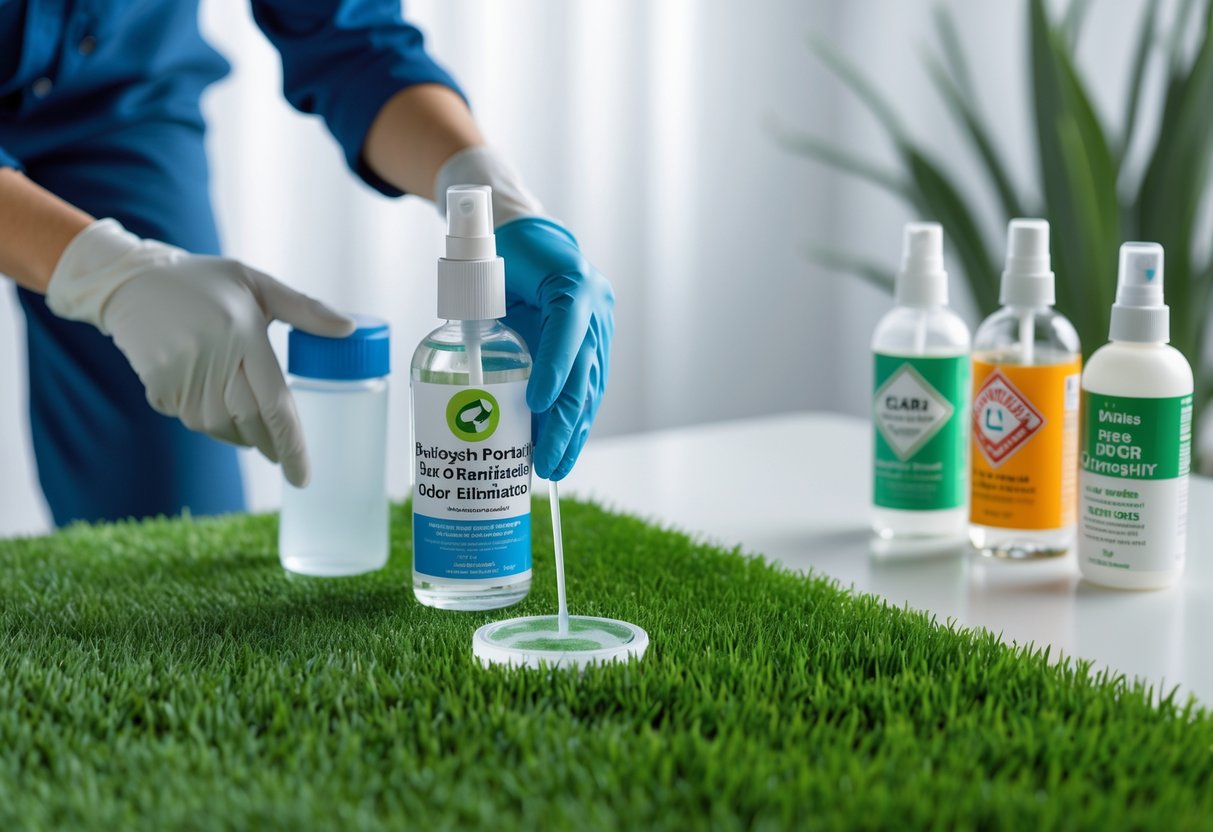
Many artificial turf owners try different cleaning methods before finding an effective solution. Common household remedies and commercial cleaners often fall short when dealing with stubborn pet urine odors that penetrate deep into turf backing.
Limitations of Vinegar and Baking Soda
Vinegar and baking soda are popular DIY solutions, but they have serious drawbacks for turf cleaning. Vinegar’s acidic nature can damage artificial grass fibers over time and may discolor your turf.
Baking soda only masks odors temporarily instead of eliminating them. It sits on the surface and doesn’t reach the backing where urine bacteria grows.
These household items work poorly in outdoor conditions. Rain washes away baking soda quickly, while vinegar loses effectiveness when diluted by moisture.
Key problems with DIY methods:
- Surface-level cleaning only
- No bacterial elimination
- Weather reduces effectiveness
- Risk of turf damage
Drawbacks of Enzyme Cleaners and Pressure Washers
Enzyme-based cleaners break down organic matter slowly and need perfect conditions to work. They require specific temperatures and pH levels that outdoor turf rarely maintains.
Most enzyme cleaners take 24-48 hours to show results. During this time, pets and family members can’t use the treated area safely.
Pressure washers seem powerful but actually push urine deeper into the turf backing. The high water pressure spreads contamination to clean areas nearby.
Problems with these methods:
- Slow results (24-48 hours)
- Weather-dependent effectiveness
- May spread contamination
- Limited penetration power
Turf Mist vs. Alternative Turf Deodorizers
Turf Mist’s hydrogen peroxide formula works faster than alternatives like TurFresh BioX. It activates immediately upon contact with odor-causing bacteria.
Unlike enzyme cleaners, Turf Mist doesn’t require specific weather conditions. It works in hot, cold, or humid environments without losing effectiveness.
The hydrogen peroxide base penetrates deeper than surface cleaners. One application treats the backing material where most odor problems start.
Turf Mist advantages:
- Immediate activation – no waiting period
- Weather independent – works in all conditions
- Deep penetration – reaches turf backing
- Safe formula – hydrogen peroxide breaks down naturally
Most commercial turf deodorizers only mask smells temporarily. Turf Mist eliminates odor molecules completely, preventing them from returning.
Related Reading on TurfMist
Looking for a direct comparison or local guidance?
- Best Turf Odor Eliminator 2026 – Top 10 Honest Comparison
- TurfMist vs OxyTurf (both hydrogen peroxide)
- TurfMist vs TurFresh BioS+ (H₂O₂ vs enzyme)
- TurfMist vs BioTurf BioS+ (RTU vs concentrate)
- TurfMist vs URI-CIDE (H₂O₂ vs live bacteria)
City-specific guides: Las Vegas · Phoenix · Los Angeles · San Diego · Orange County · Scottsdale · Henderson · Summerlin · Tempe · North Las Vegas
